
How Does a Power Inductor Work?
Understand how a power inductor works, including its working principle, electromagnetic induction, magnetic field generation, energy storage, ripple current reduction, and its role in DC-DC converters and switching power supplies.
Introduction
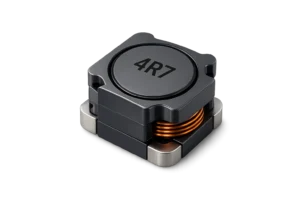
Power inductors are essential components in modern power electronics, where they store energy, regulate current, and improve circuit efficiency. If you’re wondering how does a power inductor work, it operates by using electromagnetic induction to create a magnetic field whenever current flows through its coil. The stored energy is then released as the current changes, helping stabilize voltage and reduce ripple current.
Power inductors are widely used in DC-DC converters, switching power supplies, automotive electronics, industrial equipment, LED drivers, and consumer electronics. Understanding their working principle is important for selecting the right inductor and designing efficient electronic circuits.
MTPQ1210 Series
Power Inductor
Access the complete technical datasheet including electrical specifications, dimensions, current ratings, DCR, operating temperature and package information.
View DatasheetWhat Is a Power Inductor?
Definition
A power inductor is a passive electronic component that stores electrical energy in the form of a magnetic field when current flows through its coil. It regulates current, reduces ripple, improves power efficiency, and maintains stable voltage in DC-DC converters, switching power supplies, and other electronic circuits.
Purpose of a Power Inductor
- Store energy in the form of a magnetic field.
- Smooth and regulate current flow in power circuits.
- Reduce ripple current and electrical noise.
- Protect sensitive electronic components.
- Improve power conversion efficiency.
What Is the Working Principle of a Power Inductor?
Electromagnetic Induction
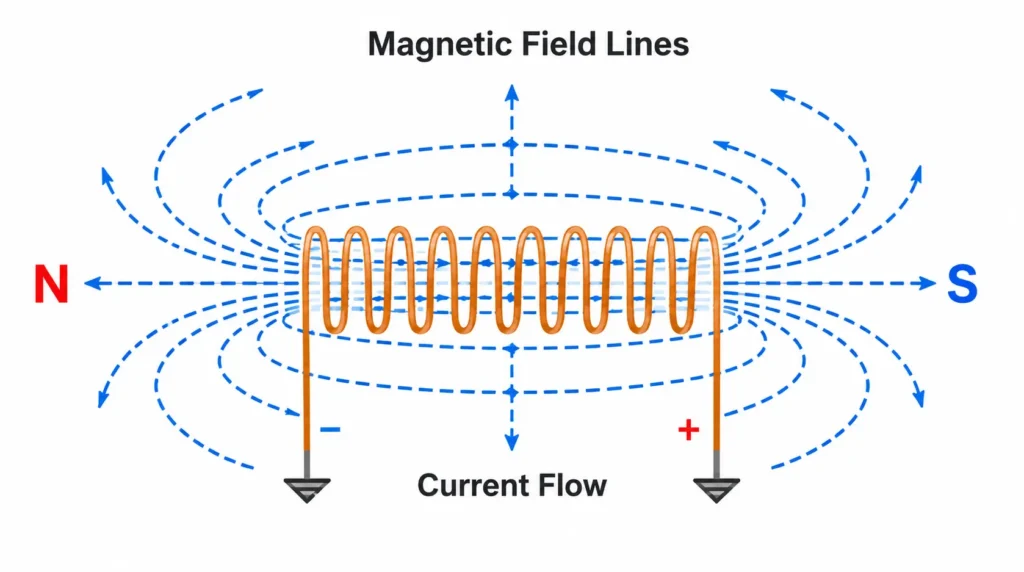
When current flows through the copper winding, it creates a magnetic field around the coil. This phenomenon, known as electromagnetic induction, forms the foundation of a power inductor's operation and enables efficient energy transfer.
Energy Storage
The magnetic field stores electrical energy while current is flowing. As the current decreases, the stored energy is released back into the circuit, helping maintain a stable current and improving efficiency.
Magnetic Field Generation
The strength of the magnetic field depends on the current flowing through the winding and the core material. This magnetic field allows the inductor to resist sudden current changes and reduce ripple.
How Magnetic Field Induction Happens
Magnetic field induction is the fundamental process that explains how a power inductor works. When electric current flows through the copper winding of a power inductor, it generates a magnetic field around the coil. As the current increases, the magnetic field becomes stronger, storing energy within the magnetic core. If the current changes, the magnetic field also changes, inducing a voltage that opposes the change in current. This electromagnetic behaviour enables efficient energy storage, smooth current flow, and reliable power conversion in DC-DC converters, switch-mode power supplies (SMPS), automotive electronics, and many other electronic systems.
Key Takeaways
- Current flowing through the coil creates a magnetic field.
- The magnetic core concentrates magnetic flux.
- A changing magnetic field induces voltage.
- The induced voltage opposes changes in current.
- Enables efficient energy storage and smooth current flow.
- Helps reduce current ripple in power circuits.
- Improves the efficiency of DC-DC converters and SMPS.
How a Power Inductor Stores and Releases Energy
A power inductor continuously stores and releases energy during every switching cycle, making it an essential component in modern power electronics. When current flows through the inductor, electrical energy is converted into magnetic energy and stored within the magnetic field surrounding the coil. As the current decreases or the switching device turns off, the stored magnetic energy is released back into the circuit to maintain a smooth and continuous current flow. This continuous energy transfer improves power conversion efficiency, reduces current ripple, and ensures stable operation in DC-DC converters, switch-mode power supplies (SMPS), automotive electronics, and industrial power systems.
Step-by-Step Working of a Power Inductor
the Coil
Builds
Stored
OFF
Released
How a Power Inductor Works in a DC-DC Converter
- Switch is ON
- Current increases through inductor
- Inductor stores energy in magnetic field
- Diode is reverse biased
- Switch is OFF
- Inductor releases energy
- Diode conducts and supplies energy
- Inductor maintains current flow
Why Power Inductors Reduce Current Ripple
Factors Affecting Power Inductor Performance
- Stores magnetic energy
- Controls ripple current
- Improves voltage stability
- Prevents overheating
- Supports high current
- Improves reliability
- Prevents core saturation
- Maintains stable inductance
- Improves circuit efficiency
- Reduces power loss
- Minimizes heat generation
- Improves efficiency
- Supports high-frequency operation
- Reduces core losses
- Improves magnetic efficiency
- Reduces inductor size
- Improves power density
- Optimizes circuit efficiency
Why It Matters
Understanding the factors that affect power inductor performance helps engineers and designers select the right component for their applications. Choosing the correct inductance value, current rating, core material, and switching frequency improves circuit efficiency, reduces power loss, minimizes heat generation, and ensures stable operation. A properly selected power inductor also extends the lifespan of electronic devices and enhances the reliability of power conversion systems.
Key Benefits
- Improves power conversion efficiency
- Reduces ripple current and voltage fluctuations
- Minimizes heat generation and power loss
- Prevents magnetic saturation and circuit failure
- Ensures stable energy storage and delivery
- Increases the lifespan of electronic components
Applications of Power Inductors
Power inductors are widely used in modern electronic circuits where efficient energy storage, voltage regulation, and current filtering are required. Their ability to reduce ripple current and improve power conversion makes them an essential component in a wide range of consumer, industrial, automotive, and renewable energy applications.
DC-DC Converters
Power inductors store and release energy during each switching cycle, helping DC-DC converters maintain a stable output voltage while improving overall conversion efficiency.
Switching Power Supplies (SMPS)
In switching mode power supplies, power inductors smooth the output current, reduce voltage ripple, and improve system efficiency by minimizing energy losses.
Automotive Electronics
Electric vehicles, engine control units (ECUs), battery management systems (BMS), and onboard chargers use power inductors for efficient power regulation and reliable operation.
Renewable Energy Systems
Solar inverters, wind power converters, and energy storage systems rely on power inductors to ensure stable power conversion and efficient energy transfer.
LED Drivers
Power inductors regulate current in LED lighting circuits, providing consistent brightness while improving energy efficiency and extending LED lifespan.
Consumer Electronics
Laptops, smartphones, tablets, gaming consoles, televisions, and networking devices use power inductors to deliver stable power and reduce electrical noise.