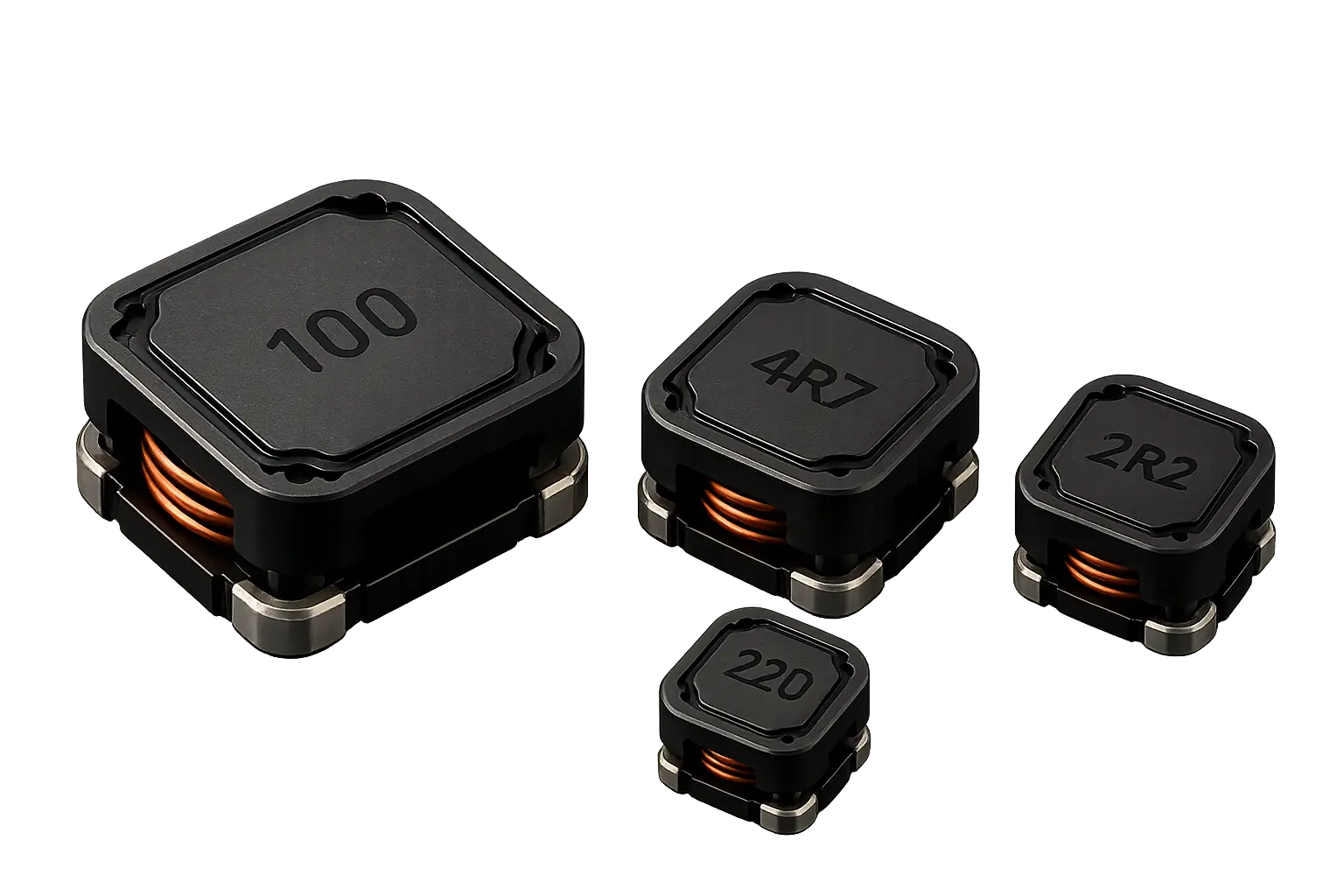
Shielded Power Inductor
High-performance shielded power inductors designed for efficient power conversion, reduced magnetic interference and reliable operation in demanding electronic applications.
What Is a Shielded Power Inductor?
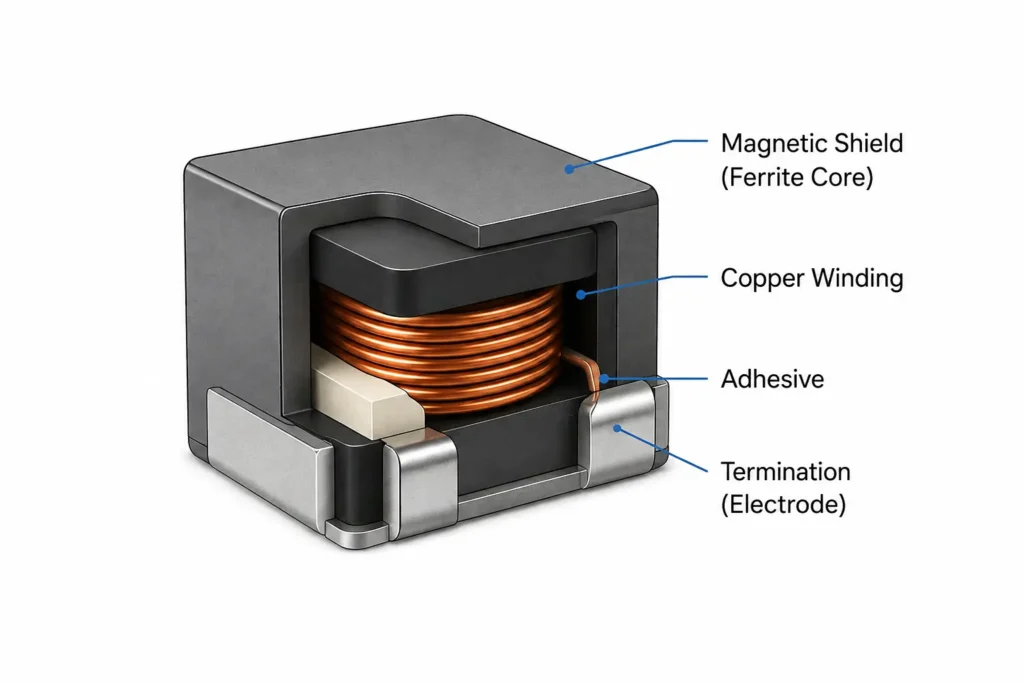
A shielded power inductor is a type of power inductor designed with a magnetic shielding structure around its winding and core. The shielding helps contain magnetic flux within the component and can reduce magnetic interference with nearby components and PCB traces.
Shielded power inductors are commonly used in DC-DC converters, switching power supplies, automotive electronics, industrial equipment, and other power-management circuits where efficient energy storage and controlled magnetic interference are important.
How Does a Shielded Power Inductor Work?
A shielded power inductor works by converting electrical energy into magnetic energy and storing it within its magnetic core. When current flows through the winding, a magnetic field is generated and concentrated through the core. The shielded construction helps control magnetic flux leakage, reducing stray magnetic fields and electromagnetic interference (EMI).
As the circuit current changes, the stored magnetic energy is released back into the circuit, supporting stable power conversion, filtering, and voltage regulation.
Current Flows Through the Winding
When current passes through the copper winding, it creates a magnetic field around the winding.
Magnetic Field Is Generated
The magnetic field produced by the winding becomes concentrated around the magnetic core. The strength of this field depends on factors such as current, number of turns, and core material.
Energy Is Stored in the Magnetic Field
As current increases, the inductor stores energy in its magnetic field. This stored energy can later be supplied back to the circuit when the current changes.
Magnetic Core Concentrates the Flux
The magnetic core provides a low-reluctance path for magnetic flux, allowing the inductor to achieve high inductance in a compact package.
Shielding Controls Flux Leakage
In a shielded power inductor, the magnetic structure helps contain the magnetic flux within or close to the core. This reduces stray magnetic fields and helps minimize interference with nearby components.
Stored Energy Is Released
When the circuit requires energy or the current begins to decrease, the magnetic field collapses and the stored energy is released back into the circuit. This makes the inductor useful for DC-DC converters, switching power supplies, voltage regulation, and filtering applications.
Key Benefits of Shielded Power Inductors
KEY SPECIFICATIONS
Shielded vs. Unshielded Power Inductors
Shielded and unshielded power inductors differ mainly in how they manage magnetic flux. Shielded power inductors use a magnetic structure that keeps most of the flux contained within the core, helping reduce flux leakage and EMI.
Unshielded power inductors allow more magnetic flux to extend outside the component, which can increase interference with nearby components but may offer advantages in cost and certain applications.
| Feature | Shielded Power Inductor | Unshielded Power Inductor |
|---|---|---|
| Magnetic Flux | Better contained within the core | More flux can extend outside the core |
| EMI | Lower electromagnetic interference | Higher potential for magnetic interference |
| Flux Leakage | Low | Higher |
| PCB Placement | Suitable for compact layouts and components placed nearby | Requires more consideration of component spacing |
| Noise Performance | Better for noise-sensitive circuits | Less suitable for highly noise-sensitive circuits |
| Size | Compact designs are commonly available | Often available in simple, compact constructions |
| Cost | Generally higher | Generally lower |
| Typical Applications | DC-DC converters, automotive electronics, power supplies, communication equipment | General power circuits, filtering, and applications where EMI is less critical |