
POWER INDUCTOR
FOR DC-DC CONVERTERS
BASIC KNOWLEDGE & APPLICATION GUIDE
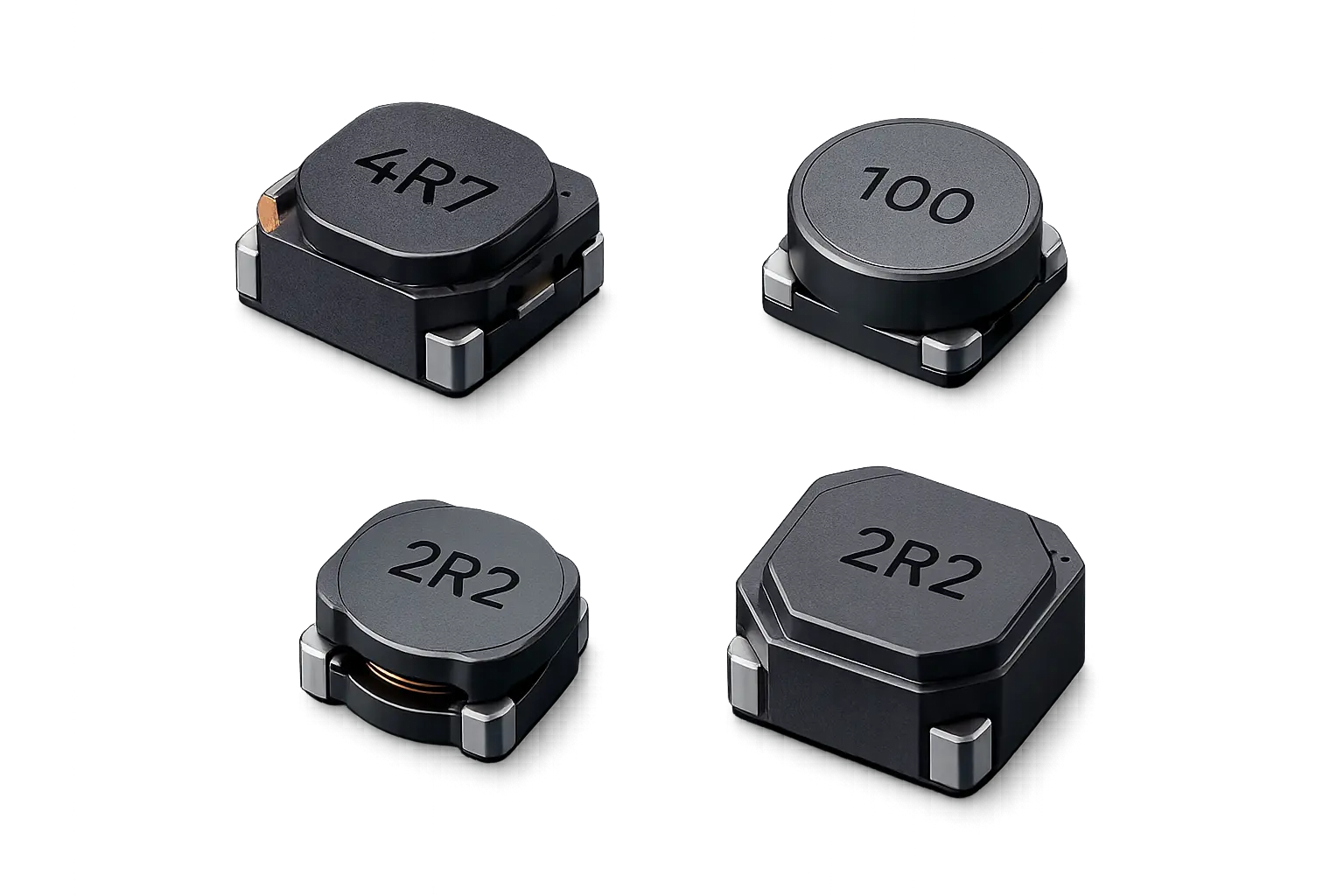
Power Inductor for DC-DC Converters
A power inductor for DC-DC converters is a critical component that stores and transfers energy during the switching process, enabling efficient voltage conversion with minimal power loss.
It helps regulate current flow, reduce output ripple, and maintain a stable output voltage, making it essential for high-performance power management systems.
Power inductors are widely used in buck, boost, and buck-boost converters across automotive electronics, industrial equipment, telecommunications, renewable energy systems, and consumer devices.
Selecting the right inductor based on inductance, current rating, DC resistance (DCR), and operating frequency improves converter efficiency, thermal performance, and long-term reliability.
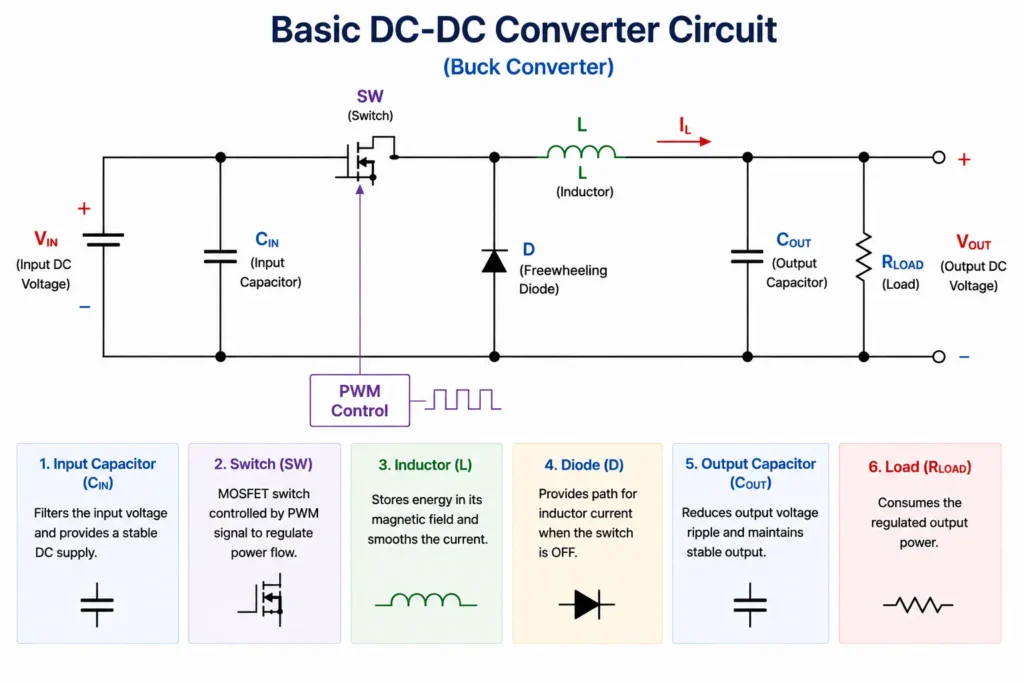
Why Power Inductors Are Essential in DC-DC Converters
| 01 | ENERGY STORAGE IN SWITCHING CIRCUITS | The inductor stores energy in its magnetic field when the switch is ON and releases it when the switch is OFF, maintaining power flow to the load. |
| 02 | OUTPUT VOLTAGE REGULATION | Inductors help smooth the voltage waveform and maintain a stable output voltage against input and load variations. |
| 03 | RIPPLE CURRENT REDUCTION | Inductors reduce current ripple by storing and releasing energy, resulting in smoother current flow and less stress on components. |
| 04 | IMPROVING CONVERSION EFFICIENCY | A properly selected power inductor minimizes power losses and improves overall converter efficiency. |
| 05 | EMI AND NOISE SUPPRESSION | SMD power inductors can help limit high-frequency noise and reduce electromagnetic interference (EMI) for cleaner operation. |
What Is a DC-DC Converter?
A DC-DC converter is an electronic power conversion circuit that changes one direct current (DC) voltage level to another while maintaining high efficiency. It is widely used in modern electronic systems to provide the correct voltage required by different components, batteries, and power supplies.
A DC-DC converter works by rapidly switching electronic components such as MOSFETs and using passive components like power inductors, capacitors, and control ICs to regulate voltage. Unlike linear regulators, DC-DC converters minimize energy loss, making them ideal for battery-powered and high-efficiency applications.
Common types of DC-DC converters include:
| Converter Type | Function / Description |
|---|---|
| Buck Converter | Steps down a higher DC voltage to a lower voltage. |
| Boost Converter | Increases a lower DC voltage to a higher voltage. |
| Buck-Boost Converter | Can both increase and decrease the output voltage depending on the application. |
Overview of Power Inductors in DC-DC Converters
Power inductors are one of the most important components in a DC-DC converter. They temporarily store electrical energy in the form of a magnetic field when current flows through the winding and release that energy back into the circuit during the switching cycle. This continuous energy transfer helps regulate the output voltage, minimize current ripple, and improve the overall efficiency of the converter.
In modern switching power supplies, the power inductor works together with the MOSFET, capacitor, and controller IC to maintain a stable power supply. Selecting the correct power inductor for DC-DC converters is essential because it directly affects efficiency, thermal performance, current handling capability, and long-term reliability.
Main Parts of a Power Inductor
Ferrite Core
The ferrite core provides a low-loss magnetic path that allows the power inductor to store magnetic energy efficiently while minimizing core losses at high switching frequencies.
Copper Winding
The copper winding carries electrical current and generates the magnetic field required for energy storage. The wire diameter and number of turns determine the inductance value and current handling capability.
Shielding
Shielded SMD power inductors reduce electromagnetic interference (EMI) by containing the magnetic field within the component. This improves EMC performance and makes the converter more reliable in compact electronic devices.
Terminals
The terminals provide secure electrical connections to the PCB. High-quality terminals ensure low contact resistance and reliable operation under high current conditions.
Key Functions of a Power Inductor in DC-DC Converters
| Function | Description |
|---|---|
| Energy Storage | Stores energy in a magnetic field and releases it during the switching cycle for continuous power delivery. |
| Voltage Regulation | Maintains a stable output voltage by controlling energy transfer within the DC-DC converter. |
| Ripple Reduction | Reduces current and voltage ripple to provide smooth and reliable power output. |
| High Efficiency | Minimizes power loss, improves converter efficiency, and reduces heat generation. |
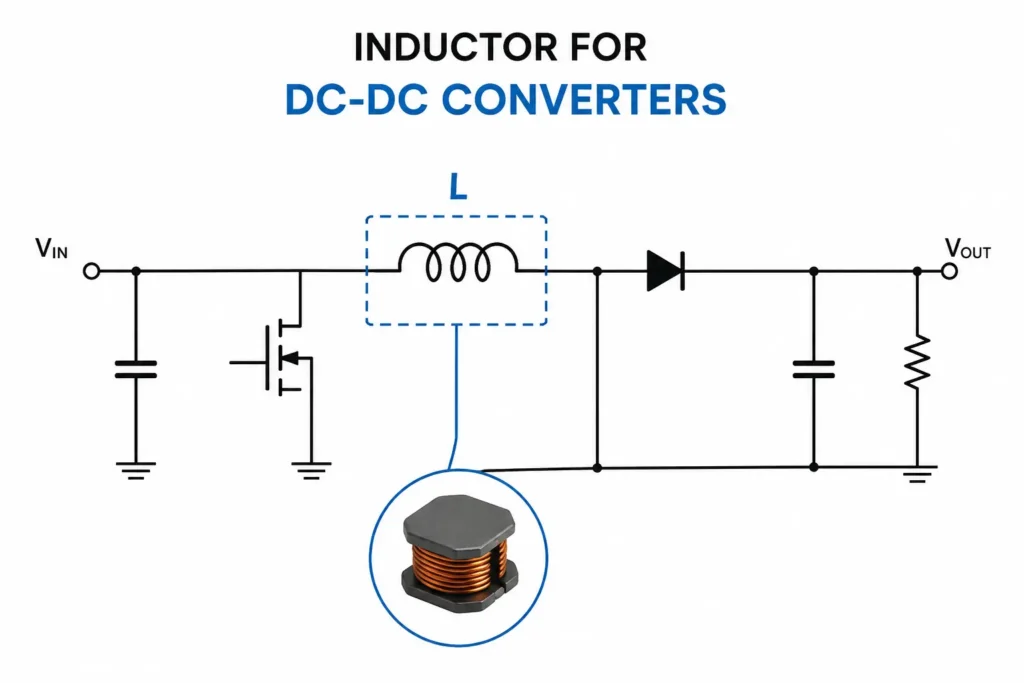
Applications of Power Inductors in DC-DC Converters
Power Inductor Calculator for DC-DC Converters
Selecting the correct power inductor manually can be time-consuming and may lead to design errors if key parameters are overlooked. Our LCAL Power Inductor Calculator simplifies the selection process by helping engineers calculate the recommended inductance value based on their DC-DC converter design requirements.
Whether you’re designing a Buck, Boost, or Buck-Boost converter, the calculator provides quick and accurate results, making it easier to choose the right power inductor for improved efficiency, reduced ripple current, and reliable performance.
Calculate Your Inductor Value in Seconds
Designing a DC-DC converter requires selecting the correct inductance value to achieve optimal efficiency and stable performance. Instead of performing complex manual calculations, use our LCAL Power Inductor Calculator to quickly determine the recommended inductance for your application.
Frequently Asked Questions
Conclusion
Choosing the right power inductor for DC-DC converters is essential for achieving high efficiency, stable voltage regulation, and reliable long-term performance. By understanding key selection parameters such as inductance value, saturation current, rated current, and DC resistance (DCR), engineers can optimize converter performance for a wide range of applications.
To simplify the design process, use the LCAL Power Inductor Calculator to quickly determine the recommended inductance value for your DC-DC converter. Whether you’re designing a Buck, Boost, or Buck-Boost converter, the calculator helps you make accurate component selections, reduce design time, and improve overall system efficiency.