
Shielded Power Inductor
Shielded power inductors are designed for efficient energy storage and power conversion while helping reduce magnetic flux leakage and EMI.
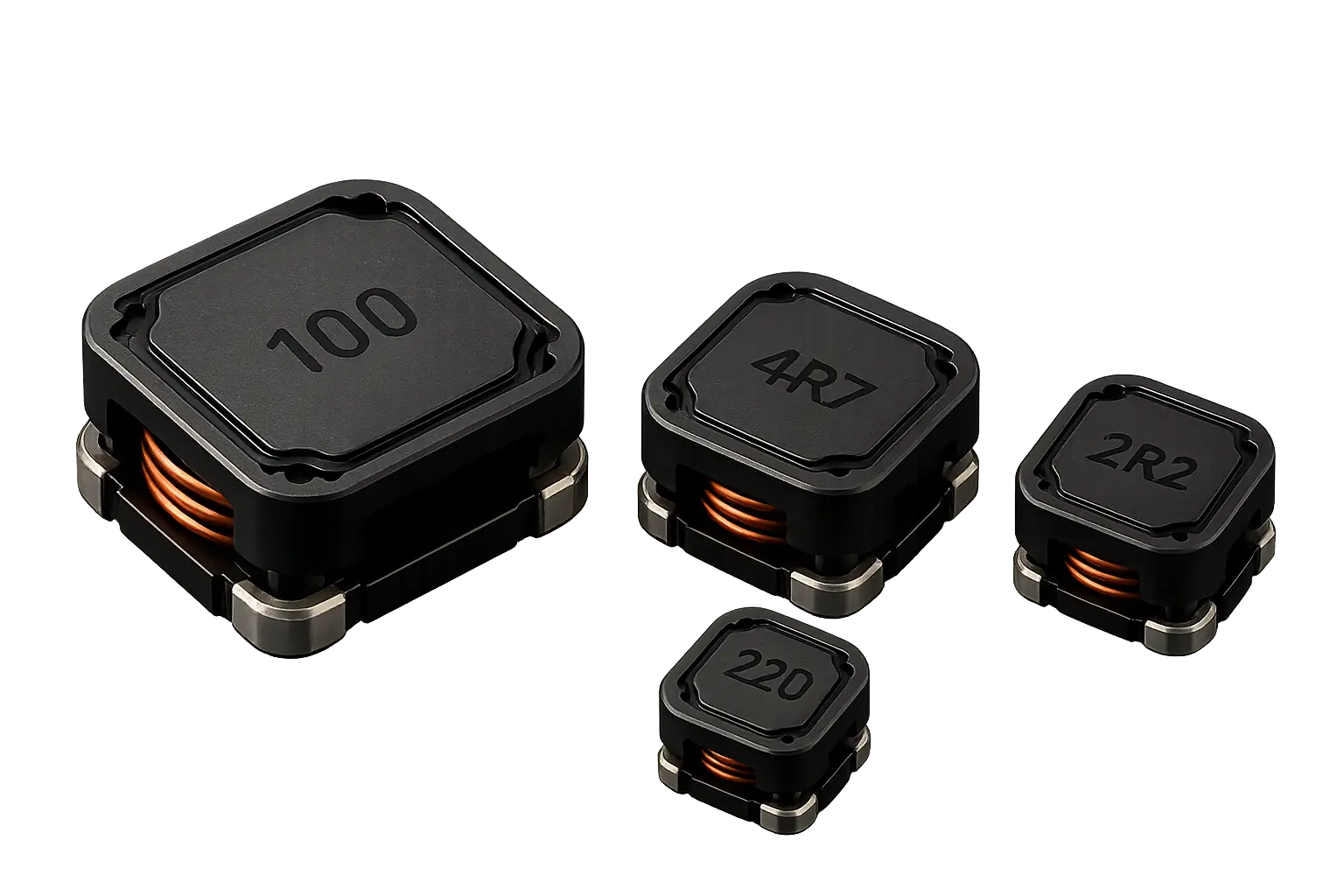
Shielded Power Inductor for Power Supplies
A shielded power inductor is a type of power inductor designed with a magnetic shielding structure around its winding and core. The shielding helps contain magnetic flux within the component and can reduce magnetic interference with nearby components and PCB traces.
Shielded power inductors are commonly used in DC-DC converters, switching power supplies, automotive electronics, industrial equipment, and other power-management circuits where efficient energy storage and controlled magnetic interference are important.
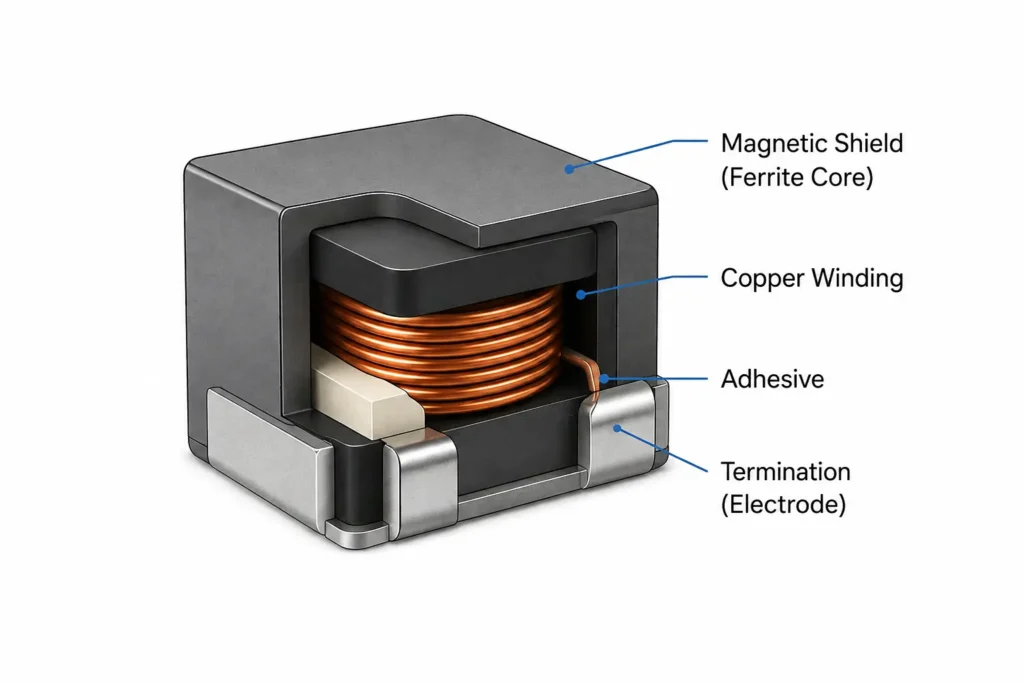
How Does a Shielded Power Inductor Work?
A shielded power inductor works by converting electrical energy into magnetic energy and storing it within its magnetic core. When current flows through the winding, a magnetic field is generated and concentrated through the core. The shielded construction helps control magnetic flux leakage, reducing stray magnetic fields and electromagnetic interference (EMI).
As the circuit current changes, the stored magnetic energy is released back into the circuit, supporting stable power conversion, filtering, and voltage regulation.
Current Flows Through the Winding
When current passes through the copper winding, it creates a magnetic field around the winding. To learn more about the underlying principles, check out our guide on how a power inductor work.
Magnetic Field Is Generated
The magnetic field produced by the winding becomes concentrated around the magnetic core. The strength of this field depends on factors such as current, number of turns, and core material.
Energy Is Stored in the Magnetic Field
As current increases, the inductor stores energy in its magnetic field. This stored energy can later be supplied back to the circuit when the current changes.
Magnetic Core Concentrates the Flux
The magnetic core provides a low-reluctance path for magnetic flux, allowing the inductor to achieve high inductance in a compact package.
Shielding Controls Flux Leakage
In a shielded power inductor (explore our SMD power inductor manufacturer overview), the magnetic structure helps contain the magnetic flux within or close to the core. This reduces stray magnetic fields and helps minimize interference with nearby components.
Stored Energy Is Released
When the circuit requires energy or the current begins to decrease, the magnetic field collapses and the stored energy is released back into the circuit. As a trusted power inductor manufacturer, we engineer these components to be ideal for DC-DC converters, switching power supplies, voltage regulation, and filtering applications.
Key Benefits of Shielded Power Inductors
KEY SPECIFICATIONS
Key Features of Shielded Power Inductors
Shielded power inductors for power supplies are designed to store and release electrical energy efficiently while controlling magnetic flux leakage. Their shielded construction helps reduce EMI, while low DCR, high saturation current, and compact size support efficient and reliable power conversion in modern electronic systems.
Magnetic Shielding
The shielded magnetic construction helps contain the magnetic flux within the inductor and minimizes unwanted flux leakage into surrounding components. This can help reduce electromagnetic interference and magnetic coupling, which is particularly important in compact power supply designs with high switching frequencies.
Low DCR
Low DC resistance (DCR) helps reduce resistive losses as current flows through the winding. Lower winding resistance can reduce heat generation and improve energy efficiency, especially in applications where the inductor carries continuous or high load current.
High Saturation Current
High saturation current capability allows the inductor to handle higher levels of current before its inductance begins to decrease significantly. This characteristic is important in power supplies that experience high load currents or temporary current peaks.
Compact Size
Compact shielded power inductors are designed to provide the required electrical performance while occupying limited PCB space. Their small footprint makes them suitable for modern electronic devices where board space is limited and components are positioned close together.
High Efficiency
A combination of low DCR, optimized magnetic materials, and appropriate winding construction helps minimize energy losses during operation. Improved efficiency can reduce unnecessary heat generation and support better overall thermal performance within the power supply.
Reliable Thermal Performance
Shielded power inductors must operate reliably within the temperature range of the target application. Proper core and winding design helps manage losses and temperature rise during continuous current operation.
Wide Application Compatibility
Shielded power inductors can be used across a wide range of power-management circuits, including DC-DC converters, switching power supplies, power modules, LED drivers, battery-powered systems, and automotive electronics.
Shielded vs. Unshielded Power Inductors
Shielded and unshielded power inductors differ mainly in how they manage magnetic flux. Shielded power inductors use a magnetic structure that keeps most of the flux contained within the core, helping reduce flux leakage and EMI.
Unshielded power inductors allow more magnetic flux to extend outside the component, which can increase interference with nearby components but may offer advantages in cost and certain applications.
| Feature | Shielded Power Inductor | Unshielded Power Inductor |
|---|---|---|
| Magnetic Flux | Better contained within the core | More flux can extend outside the core |
| EMI | Lower electromagnetic interference | Higher potential for magnetic interference |
| Flux Leakage | Low | Higher |
| PCB Placement | Suitable for compact layouts and components placed nearby | Requires more consideration of component spacing |
| Noise Performance | Better for noise-sensitive circuits | Less suitable for highly noise-sensitive circuits |
| Size | Compact designs are commonly available | Often available in simple, compact constructions |
| Cost | Generally higher | Generally lower |
| Typical Applications | DC-DC converters, automotive electronics, power supplies, communication equipment | General power circuits, filtering, and applications where EMI is less critical |
Technical Specifications of Shielded Power Inductors
Shielded power inductors are available in different electrical and mechanical configurations to meet the requirements of power supplies and power-conversion circuits. Key parameters such as inductance, DCR, saturation current, rated current, and operating temperature should be considered when selecting the appropriate component.
Technical Specification Table
| Parameter | Value | Unit |
|---|---|---|
| Inductance | Series Dependent | µH |
| Inductance Tolerance | ±20 / Custom | % |
| DC Resistance (DCR) | Series Dependent | mΩ |
| Saturation Current | Series Dependent | A |
| Rated Current | Series Dependent | A |
| Operating Temperature | Series Dependent | °C |
| Package Size | Series Dependent | mm |
| Shielding Type | Magnetic Shielding | — |
| Mounting Type | SMD | — |
Frequently Asked Questions
A shielded power inductor is an inductor with magnetic shielding that helps reduce magnetic flux leakage and EMI in power supply circuits. Browse our collection at the power inductor manufacturer page.
A shielded power inductor is used for energy storage and current regulation in DC-DC converters, switching power supplies, LED drivers, and power modules.
The main benefits include lower EMI, low DCR, high saturation current, compact size, and efficient power conversion.
A shielded power inductor stores energy in its magnetic field when current flows through its winding and releases the stored energy as the circuit requires it.
Magnetic shielding helps control flux leakage and reduce unwanted magnetic interference with nearby electronic components.
A shielded power inductor provides better control of magnetic flux leakage, while an unshielded inductor allows more magnetic flux to extend into the surrounding area. Find out more via our SMD power inductor manufacturer overview.
Select the inductor based on inductance, saturation current, rated current, DCR, operating temperature, switching frequency, and package size.
Yes. Shielded power inductors are widely used in power inductors for DC-DC converters because they provide energy storage, current handling, and better control of magnetic interference.
Yes. Low DCR reduces resistive losses and heat generation, which can help improve the efficiency of a power supply.
Yes. Custom shielded power inductors can be designed according to required inductance, current rating, dimensions, and other application-specific specifications, subject to manufacturer capabilities.
Conclusion
Shielded power inductors for power supplies provide efficient energy storage, low EMI, high current handling, and compact construction for modern power-conversion applications. With features such as low DCR, high saturation current, and magnetic shielding, they are suitable for DC-DC converters, switching power supplies, LED drivers, power modules, and other electronic systems.
Choosing the right shielded power inductor based on inductance, current rating, DCR, temperature, switching frequency, and package size helps achieve reliable and efficient circuit performance. For application-specific requirements, contact Magno Teknik for suitable product specifications, samples, and datasheet support.