
High Current
Power Inductor
High-current magnetic components designed for power conversion, energy storage and power supply applications.
Capability
Performance
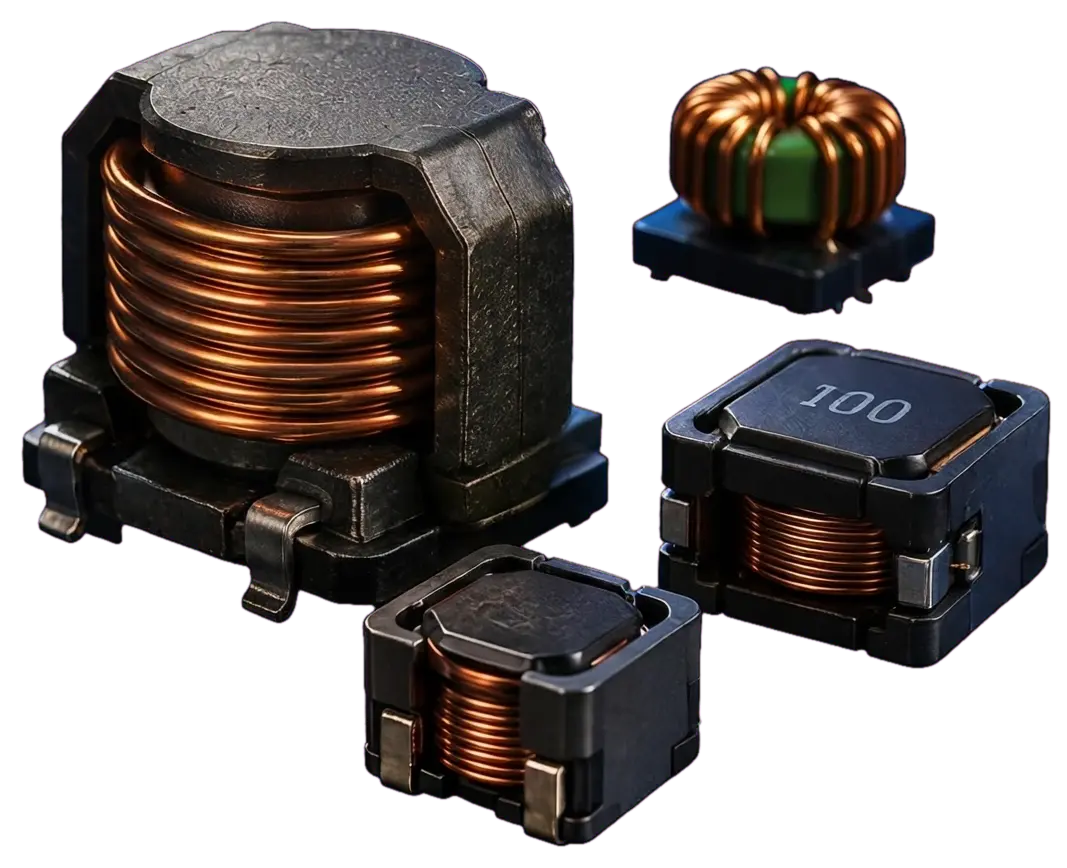
A High Current Power Inductor is a power magnetic component designed to store energy, control current, and reduce current ripple in high-power electronic circuits. These inductors are engineered to handle higher load currents while maintaining stable inductance, low DC resistance (DCR), and reliable thermal performance.
High current power inductors are widely used in DC-DC converters, switching power supplies, voltage regulators, automotive electronics, industrial power systems, battery management systems, and other power conversion applications. Selecting the right inductor requires careful consideration of inductance value, rated current, saturation current, DCR, operating temperature, core construction, and physical dimensions.
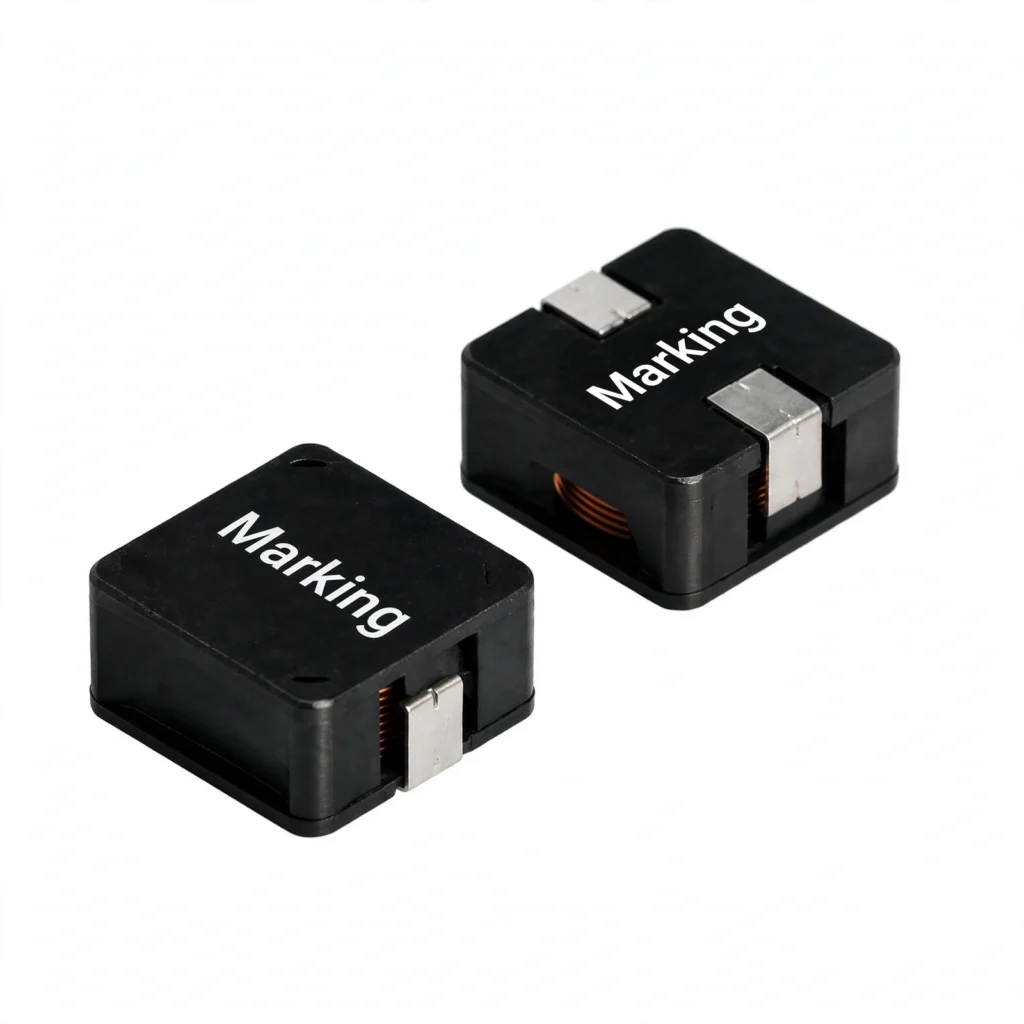
What Is a High Current Power Inductor?
A high current power inductor is a magnetic component designed to store electrical energy and regulate current in power electronic circuits while handling high continuous and peak current levels. It is commonly used in DC-DC converters, switching power supplies, voltage regulators, battery systems, automotive electronics, and industrial power applications.
High current power inductors are designed with suitable magnetic core materials, copper windings, and construction methods to provide reliable performance under demanding load conditions. Important specifications include inductance, rated current, saturation current, DC resistance (DCR), operating temperature, and physical dimensions.
How Does a High Current Power Inductor Work?
A high current power inductor works by storing electrical energy in its magnetic field when current flows through its winding. When the circuit conditions change, the stored energy is released back into the circuit, helping control current and reduce unwanted current ripple.
In power conversion circuits, the inductor works together with switching devices and capacitors to maintain stable energy transfer. Its performance depends on factors such as inductance, switching frequency, current level, saturation current, DCR, and operating temperature.
Energy Storage
When current increases through the winding, the inductor stores energy in its magnetic field. A higher inductance allows the component to store more energy for a given current level.
Current Regulation
An inductor resists rapid changes in current. This characteristic helps smooth current and control ripple in switching power supplies and DC-DC converters.
High Current Operation
A high current power inductor is designed to handle greater current without excessive losses or significant loss of inductance. Saturation current and DCR are crucial for high-load applications.
Energy Release
When the switching circuit changes state, the magnetic energy stored in the inductor is released to the load or output stage, enabling efficient energy transfer.
Key Specifications of High Current Power Inductors
Selecting the right high current power inductor requires careful evaluation of its electrical, thermal, and mechanical specifications. These parameters determine how effectively the inductor can handle high load currents, store magnetic energy, reduce ripple, and maintain reliable operation in demanding power circuits.
Key specifications include inductance value, inductance tolerance, rated current, saturation current, DC resistance (DCR), core material, operating temperature, physical dimensions, and mounting configuration. Understanding these specifications helps engineers select a high current power inductor that meets the requirements of DC-DC converters, power supplies, voltage regulators, energy-storage circuits, and other high-power applications.
Inductance
Opposes current changes and stores magnetic energy, based on topology, frequency, and ripple requirements. Explore our guides on what is a power inductor and how does a power inductor work for more details.
Rated Current
Indicates continuous current capacity under specified temperature-rise limits without overheating when sourcing from a trusted power inductor manufacturer.
Saturation Current
The current level where the core loses inductance stability, crucial for high-load performance in designs like a toroidal power inductor or drum core inductor specifications.
DC Resistance (DCR)
Winding resistance; lower DCR minimizes copper losses and voltage drop to boost efficiency, especially in a shielded power inductor for power supply.
Inductance Tolerance
Defines the allowable variance from nominal value for precise circuit and ripple control in advanced setups like a power inductor for dc-dc converters.
Operating Temperature
The safe thermal range factoring in ambient heat, load current, and core losses for continuous performance.
Dimensions & Mounting
SMD or through-hole footprint options designed to match your PCB space and assembly layout, sourced through an expert smd power inductor manufacturer.
High Current Power Inductor vs Standard Power Inductor
The main difference between a high current power inductor and a standard power inductor is their ability to operate reliably at higher current levels. High current designs typically place greater emphasis on saturation performance, low DCR, thermal management, and mechanical construction.
| Feature | High Current Power Inductor | Standard Power Inductor |
|---|---|---|
| Current handling | Designed for higher current applications | Generally intended for lower or moderate current |
| Saturation performance | Critical for maintaining inductance at high load | Depends on application |
| DCR | Low DCR is important to minimize power losses | Important, but application dependent |
| Thermal performance | Designed to manage higher load-related heating | Usually suited to lower power levels |
| Construction | Optimized for current capacity and energy storage | Varies by design |
| Typical applications | DC-DC converters, voltage regulators, power supplies, automotive and industrial electronics | Filtering, general power conversion and other electronic circuits |
High Current Power Inductor for DC-DC Converters
A high current power inductor for DC-DC converters is used to store and transfer energy while controlling current ripple during switching operation. The inductor is a key component in buck, boost, and buck-boost converter circuits, where its electrical and thermal characteristics directly affect converter efficiency and stability.
For high-load DC-DC converter applications, the selected inductor should provide the required inductance value, current rating, saturation current, low DCR, and suitable thermal performance. The inductor should also be evaluated at the actual switching frequency and operating temperature of the converter.
Buck Converters
In a buck converter, the inductor stores energy when the switching device is active and releases energy to the load during the appropriate part of the switching cycle. A suitable high current inductor helps maintain controlled output current and limits ripple.
Boost Converters
In a boost converter, the inductor stores energy from the input source and subsequently transfers that energy toward the output. The inductor must withstand the converter's continuous and peak current without excessive saturation or power loss.
Buck-Boost Converters
Buck-boost converters require inductors capable of handling significant current while maintaining stable inductance across changing operating conditions.
Power Inductor for DC-DC Converters →
High Current Power Inductor Applications
High current power inductors are used in electronic systems where power conversion, energy storage, current regulation, and ripple control require reliable operation at elevated current levels. Their combination of current-handling capability, inductance stability, and thermal performance makes them suitable for a wide range of power electronics applications.
DC-DC Converters
High current power inductors are widely used in buck, boost, and buck-boost converters to store and transfer energy while controlling current ripple. They are commonly selected for applications requiring efficient voltage conversion at higher load currents. Learn more about choosing a power inductor for dc-dc converters.
Switching Power Supplies
In switching power supplies, high current inductors help smooth current and support efficient energy transfer between switching stages and the load. Low DCR can help reduce winding losses during continuous operation. You can also explore options like a shielded power inductor for power supply.
Voltage Regulators
High current power inductors are used in voltage regulator circuits to help maintain stable output power under changing load conditions. The appropriate inductance and saturation-current rating are important for reliable regulator performance. Review drum core inductor specifications for details on design variants.
Battery Management Systems
Power inductors can be used in battery-powered equipment and power-management circuits for voltage conversion and current regulation. High current capability is particularly important where the system must handle substantial charging, discharging, or load currents. Source these parts directly through a trusted power inductor manufacturer.
Automotive Electronics
Automotive power electronics can require inductors that withstand high current, temperature variation, vibration, and demanding operating conditions. High current power inductors may be used in power converters, voltage regulators, infotainment systems, and other electronic control systems.
Industrial Power Electronics
Industrial equipment often includes high-power conversion and regulation circuits that require robust magnetic components. High current power inductors can support power supplies, motor-control systems, industrial controllers, and other power-management applications. Check out various options from an established smd power inductor manufacturer or look into a toroidal power inductor.
Telecommunications Equipment
Telecommunication systems use power conversion circuits to provide regulated power to electronic components. High current power inductors can be used in these circuits for energy storage, filtering, and current regulation. To understand more about the underlying technology, review what is a power inductor and how does a power inductor work.
How to Select a High Current Power Inductor
Selecting the right high current power inductor requires more than choosing an inductance value. The component should be evaluated against the circuit’s current, switching frequency, temperature, power-loss requirements, available PCB space, and operating conditions.
Determine Required Inductance
Based on input/output voltage, switching frequency, load current, and allowable ripple current. Review what is a power inductor and how does a power inductor work for fundamental insights.
Continuous & Peak Current
Identify operating and peak currents to ensure the component can handle them under actual conditions when configured as a power inductor for dc-dc converters.
Check Saturation Current
Compare peak current with saturation specs to prevent inductance drops and increased ripple, particularly in a toroidal power inductor or based on specific drum core inductor specifications.
Check DC Resistance (DCR)
Evaluate winding resistance to minimize copper losses, heat generation, and boost efficiency, which is essential for a high-performance shielded power inductor for power supply.
Evaluate Temperature Rise
Factor in ambient temperature, copper/core losses, PCB layout, and airflow for safe thermal operation.
Consider Switching Frequency
Ensure performance matches the operating frequency, as core material and construction impact losses.
Check Physical Dimensions
Confirm package height, footprint, mounting configuration, and terminal arrangement fit available board space when buying from a trusted smd power inductor manufacturer.
Verify the Datasheet
Cross-check manufacturer specifications with your electrical and thermal requirements before final selection by coordinating directly with an expert power inductor manufacturer.
High Current Power Inductor Specifications
The specifications of a high current power inductor determine its electrical performance, current-handling capability, thermal behavior, and suitability for a particular power circuit. Engineers should compare the manufacturer’s specifications with the actual operating conditions of the application before selecting a component.
| Specification | Description | Why It Matters |
|---|---|---|
| Inductance | Nominal inductance value of the component | Determines energy storage and current-ripple behavior |
| Inductance Tolerance | Permitted variation from the nominal value | Helps determine consistency between components |
| Rated Current | Current associated with the specified thermal or electrical limit | Indicates continuous current capability |
| Saturation Current | Current level associated with a specified reduction in inductance | Important for maintaining inductance at high load |
| DCR | DC resistance of the winding | Influences conduction losses and voltage drop |
| Operating Temperature | Permitted operating temperature range | Determines suitability for the application’s thermal environment |
| Core Material | Magnetic material used in the inductor | Influences inductance, saturation, and frequency performance |
| Package / Dimensions | Physical size and mounting configuration | Ensures PCB and mechanical compatibility |
| Shielding | Magnetic shielding construction, where applicable | Can help reduce unwanted magnetic coupling and EMI |
| Tolerance | Manufacturing variation of electrical parameters | Important where consistent circuit performance is required |
Why These Specifications Matter
For a high-current application, specifications should not be evaluated independently. Rated current, saturation current, DCR, inductance, and temperature rise interact with one another and can significantly influence efficiency and reliability.
For example, selecting an inductor solely because its inductance matches the calculated value may not be sufficient if its saturation current is too low or its DCR causes excessive power dissipation.
High Current Power Inductor Manufacturer
Magno Teknik develops and manufactures high current power inductors for power conversion, current regulation, energy storage, filtering, and other demanding electronic applications. The selection of a high current inductor depends on electrical requirements such as inductance, rated current, saturation current, DCR, operating temperature, package size, and application conditions.
High Current Inductors for Power Electronics
High current power inductors can be designed for applications where substantial current passes through the magnetic component. Suitable core materials, winding construction, conductor size, and thermal characteristics are important for achieving reliable performance under load.
Application-Specific Inductor Selection
Different applications require different combinations of inductance, current capability, physical dimensions, and thermal performance. Engineers and procurement teams should evaluate the complete electrical and mechanical specifications before selecting a component.
High Current Power Inductor Support
When selecting a high current power inductor, providing the manufacturer with complete application and design requirements helps identify the most suitable component. Important parameters include:
- Required inductance
- Continuous and peak current
- Operating voltage
- Switching frequency
- Maximum allowable DCR
- Operating temperature range
- Required dimensions
- Mounting configuration
- Application and circuit topology
These specifications allow the manufacturer to evaluate electrical, thermal, and mechanical requirements and determine whether an existing high current power inductor series meets the application needs. If a standard component does not provide the required combination of inductance, current handling, size, and thermal performance, an application-specific or customized inductor solution may be considered.
High Current Power Inductor Datasheet
A high current power inductor datasheet provides the electrical, mechanical, and environmental information required to evaluate a component for a specific application. Engineers should use the datasheet to verify that the inductor meets the circuit’s current, inductance, thermal, and dimensional requirements.
Electrical Specifications
Key electrical parameters include:
- Inductance and tolerance
- Rated current
- Saturation current
- DC resistance (DCR)
- Test conditions & characteristics
These values help determine whether the inductor can operate within the required current and power range, especially when utilizing a power inductor for dc-dc converters.
Mechanical Specifications
Mechanical information typically includes:
- Component dimensions
- Package type
- Mounting configuration
- Terminal or pin arrangement
- Recommended PCB footprint
These details are essential for confirming mechanical and PCB compatibility before production, often sourced from an expert smd power inductor manufacturer.
Thermal & Environmental Specs
Review the datasheet for:
- Operating temperature range
- Temperature-rise conditions
- Storage temperature
- Environmental requirements
Thermal performance is vital for high-current applications because winding and core losses increase component temperature in designs like a shielded power inductor for power supply.
FEATURES
Magnetically shielded
High current & less loss
Suitable for reflow soldering
Low profile for machine placement
Flat wire coil for low losses at high frequency
Operating temperature: −40 °C to +125 °C
How to Read a High Current Power Inductor Datasheet
When evaluating a datasheet, compare the inductance, rated current, saturation current, DCR, operating temperature, dimensions, and test conditions with the actual requirements of the circuit.
Avoid comparing current ratings from different manufacturers without checking their test methods and conditions, because the same parameter may be specified differently.
Frequently Asked Questions
A high current power inductor is a magnetic component designed to store energy and regulate current while handling relatively high continuous and peak current levels. It is commonly used in DC-DC converters, power supplies, voltage regulators, and other power electronics. To learn more about the fundamentals, check out what is a power inductor and how does a power inductor work, or explore options from a leading power inductor manufacturer.
A high current power inductor is commonly used for energy storage, current regulation, and ripple-current control in power inductor for dc-dc converters, shielded power inductor for power supply architectures, automotive electronics, and industrial power systems.
Consider the required inductance, continuous current, peak current, saturation current, DCR, switching frequency, operating temperature, and physical dimensions. The manufacturer's datasheet should be checked against the actual circuit requirements, referencing insights from an experienced power inductor manufacturer.
Rated current generally relates to the allowable continuous current under specified thermal conditions, while saturation current relates to the current level at which the inductor's inductance decreases according to a defined criterion. Both specifications should be considered for high-load applications like a toroidal power inductor.
DC resistance (DCR) represents the resistance of the winding. Lower DCR can help reduce conduction losses, voltage drop, and heat generation, which is particularly important in high-current power circuits. You can also explore options like a toroidal power inductor or drum core inductor specifications for alternative core designs.
A high current SMD power inductor is a surface-mount inductor designed to handle relatively high current while providing the required inductance in a compact PCB package. It is commonly used where board space and power density are important. You can source these components directly through a specialized smd power inductor manufacturer.
A high current shielded power inductor uses a construction intended to reduce magnetic flux coupling with nearby components. It can be useful in compact power electronics where EMI and magnetic interference need to be considered. For guidance on picking the right part, view solutions for a shielded power inductor for power supply.
A high current power inductor for a DC-DC converter stores and transfers energy during switching operation while helping control current ripple. Its inductance, saturation current, DCR, and thermal characteristics affect converter performance. Read more about utilizing a power inductor for dc-dc converters.
A low DCR high current inductor is designed with low winding resistance to help minimize resistive power losses during high-current operation. It can be beneficial in applications where efficiency and thermal performance are important, matching the criteria outlined in how does a power inductor work.
Check inductance, tolerance, rated current, saturation current, DCR, operating temperature, dimensions, mounting configuration, shielding, and test conditions. Review drum core inductor specifications to see how component metrics are typically laid out by an expert power inductor manufacturer.
High Current Power Inductor Manufacturer
Magno Teknik is a high current power inductor manufacturer providing reliable inductor solutions for power electronics and high-current applications. Our inductors are designed according to application requirements such as inductance, current rating, DCR, operating temperature, size, and mounting configuration.
We support standard and application-specific high current power inductors for DC-DC converters, power supplies, voltage regulators, automotive electronics, industrial equipment, and other power management applications. Customers can share their electrical and mechanical requirements to identify a suitable inductor solution.