Types of Power Inductors
Different types. Different designs.
One goal — Efficient Power Performance.
of Products
Can Trust
Performance
& Compliance
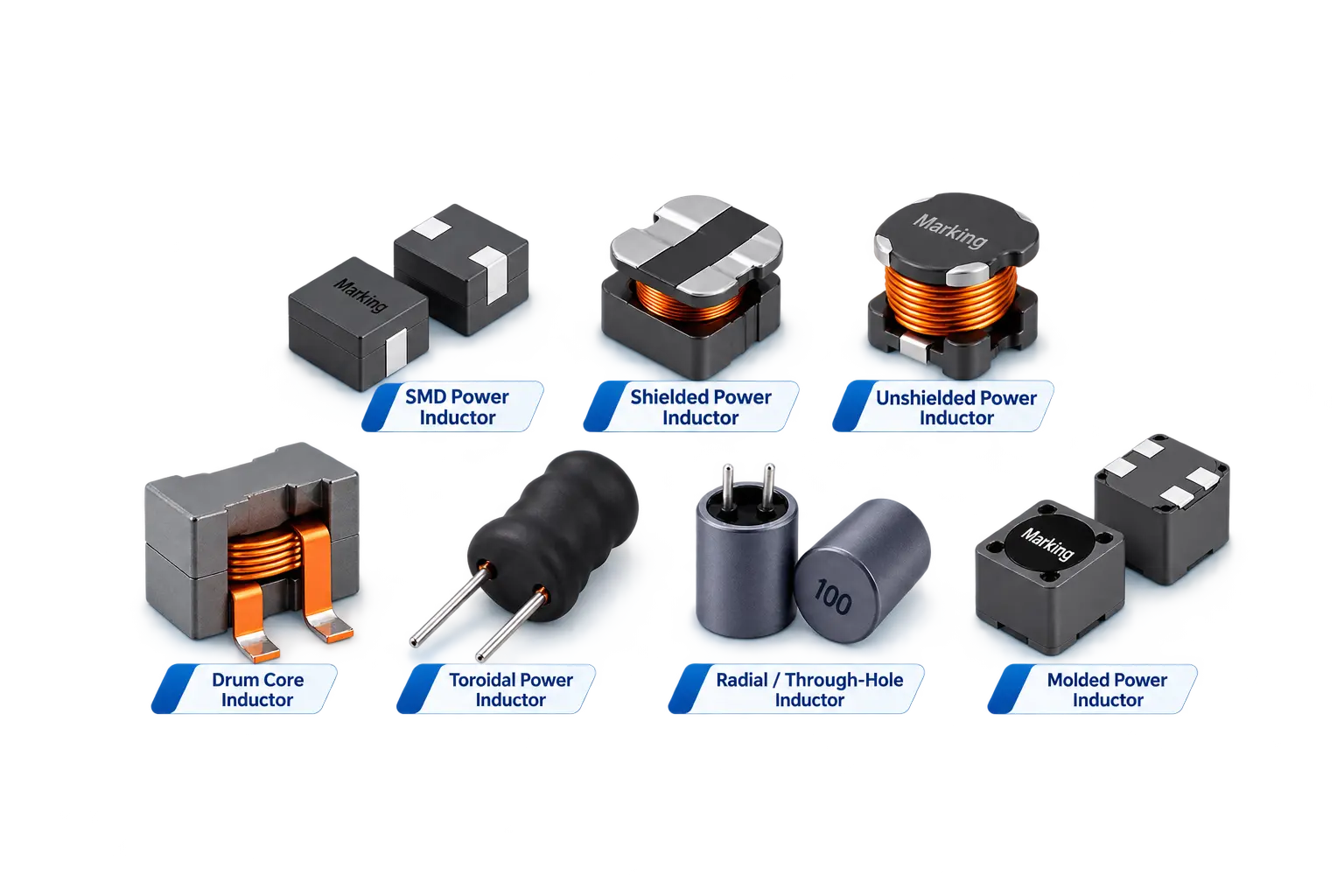
Types of power inductors vary according to their construction, magnetic core, shielding, mounting method, current capability, and intended application. Common types include SMD power inductors, shielded power inductors, unshielded power inductors, drum core inductors, toroidal power inductors, and high-current power inductors. Each type offers different electrical, thermal, mechanical, and magnetic characteristics, making selection important for applications such as DC-DC converters, switching power supplies, voltage regulators, automotive electronics, and industrial power systems.
How Are Power Inductors Classified?
Power inductors can be classified based on their mounting method, core construction, shielding, and electrical characteristics. One of the most practical classifications is by how the component is mounted on the PCB. From this perspective, power inductors are broadly available as SMD power inductors and through-hole power inductors, with each type suited to different PCB layouts, current requirements, mechanical constraints, and assembly processes.
By Mounting Method
The mounting method determines how a power inductor is installed on the printed circuit board and can influence PCB space, assembly method, mechanical stability, and thermal performance. Based on mounting method, power inductors are mainly classified into SMD and through-hole types.
Through-Hole Power Inductors: Components installed through PCB holes, generally selected when mechanical stability or larger component construction is required.
SMD Power Inductors
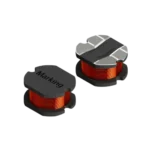
SMD power inductors are designed for direct mounting onto the surface of a PCB, making them well suited to compact and high-density electronic designs. They are commonly used in DC-DC converters, switching power supplies, voltage regulators, automotive electronics, and other power management circuits where board space and automated assembly are important.
When selecting an SMD power inductor, engineers typically consider inductance value, rated current, saturation current, DC resistance (DCR), operating frequency, package size, and thermal characteristics. Their compact construction also makes SMD power inductors suitable for modern electronic systems requiring efficient power conversion within limited PCB space.
Through-Hole Power Inductors
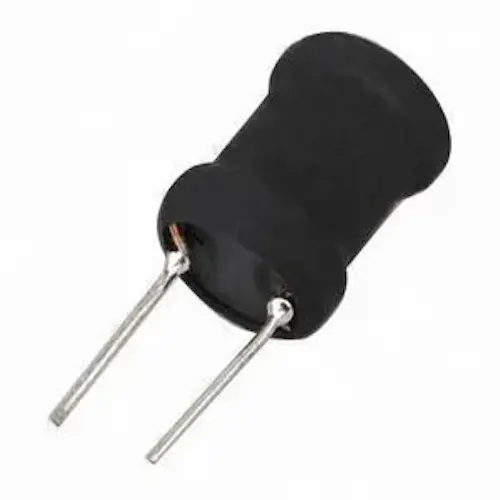
Through-hole power inductors are mounted by inserting their leads through holes in the PCB and soldering them on the opposite side. This construction provides strong mechanical attachment and can be advantageous in applications exposed to vibration, mechanical stress, or higher component weight.
Through-hole power inductors are commonly considered for power supply circuits, industrial equipment, larger power conversion assemblies, and applications where mechanical robustness is important. Selection should take into account inductance, current rating, saturation characteristics, DCR, operating temperature, component dimensions, and available PCB space.
By Core and Construction
The core material and physical construction are important factors when classifying power inductors because they influence inductance, magnetic flux, saturation behavior, losses, EMI performance, and thermal characteristics. Depending on the application, power inductors may use drum-core, toroidal, molded, shielded, or other specialized constructions. Understanding these construction types helps engineers narrow down the right power inductor type for power conversion and energy-storage applications.
Drum Core Inductors
Drum core inductors use a cylindrical magnetic core with a winding around the core, typically with extended ends or terminals for electrical connection. This construction provides a straightforward way to achieve the required inductance and is widely used in power supply circuits, DC-DC converters, filtering circuits, and energy-storage applications.
When selecting a drum core inductor, engineers should evaluate inductance, saturation current, rated current, DC resistance (DCR), core material, operating frequency, and temperature characteristics. The physical construction and magnetic material can significantly affect the inductor’s performance under load.
Toroidal Power Inductors
Toroidal power inductors use a ring-shaped magnetic core with the winding distributed around the core. The closed magnetic path can provide efficient magnetic coupling and help reduce external magnetic-field leakage compared with some open-core constructions.
Toroidal power inductors can be suitable for power supplies, filtering, energy storage, DC-DC conversion, and industrial power electronics where magnetic performance and controlled electromagnetic interference are important. Important selection parameters include inductance, current rating, saturation current, DCR, core material, operating frequency, and thermal performance.
Other Constructions
Beyond drum-core and toroidal designs, power inductors are available in several other constructions developed for specific electrical, thermal, mechanical, and EMI requirements. These can include molded power inductors, shielded power inductors, unshielded constructions, multilayer structures, and application-specific designs.
The appropriate construction depends on factors such as available PCB space, current level, inductance requirement, switching frequency, magnetic-field containment, thermal conditions, and mechanical requirements. Therefore, construction should be evaluated together with the electrical specifications rather than treated as an isolated selection criterion.
By Magnetic Shielding
Power inductors can also be classified according to whether their magnetic field is contained within the component. Based on magnetic construction, they are generally divided into shielded power inductors and unshielded power inductors. The choice between these types depends on factors such as EMI requirements, PCB layout, component spacing, operating current, and the sensitivity of nearby circuits to magnetic-field interference.
Shielded Power Inductors
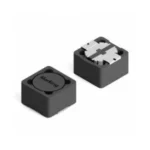
Shielded power inductors are designed to contain the magnetic flux within or around the magnetic core and winding structure, reducing magnetic-field leakage into nearby components and PCB traces. This makes them particularly useful in compact power supply, DC-DC converter, voltage regulator, and power management circuits where controlling electromagnetic interference (EMI) is important.
When selecting a shielded power inductor, engineers should consider inductance, saturation current, rated current, DC resistance (DCR), operating frequency, temperature rise, package dimensions, and shielding construction. A shielded design can be beneficial when multiple magnetic or sensitive electronic components are positioned close together on the PCB.
Unshielded Power Inductors
Unshielded power inductors do not use a magnetic shielding structure specifically intended to minimize external magnetic-field leakage. Their simpler construction can provide a practical solution for power circuits where surrounding components are sufficiently separated and magnetic interference is not a major design constraint.
When using an unshielded power inductor, PCB layout and component placement become especially important. Engineers should maintain appropriate spacing from sensitive signal paths, sensors, communication circuits, and other components that could be affected by magnetic fields. Electrical parameters such as inductance, current rating, saturation current, DCR, frequency, and temperature performance should still be evaluated during selection.
By Current Requirement
Power inductors can also be classified according to the amount of current they are designed to handle. Current capability is a critical consideration because excessive current can increase power loss, temperature rise, and magnetic saturation. Based on current requirements, engineers may select standard power inductors for moderate load conditions or high current power inductors for applications that demand greater current-handling capability.
Standard Power Inductors
Standard power inductors are designed for power circuits with moderate current requirements and are available across a wide range of inductance values, package sizes, and electrical characteristics. They are commonly used for power filtering, energy storage, voltage regulation, DC-DC conversion, and general power management applications.
When selecting a standard power inductor, engineers should evaluate inductance, rated current, saturation current, DC resistance (DCR), operating frequency, temperature rise, and physical dimensions. The required current rating should provide sufficient margin above the circuit’s expected operating current to maintain reliable performance.
High Current Power Inductors
High current power inductors are designed to handle higher load currents while maintaining suitable inductance and thermal performance. They are commonly used in high-power DC-DC converters, voltage regulators, automotive electronics, industrial power supplies, and other high-current power management circuits.
For a high current power inductor, selection should consider both continuous and peak current requirements. Key parameters include rated current, saturation current, DCR, inductance under load, temperature rise, core material, operating frequency, and thermal dissipation. A suitable high-current design helps prevent excessive losses and unwanted inductance reduction during demanding operating conditions.
What Are the Main Types of Power Inductors?
The main types of power inductors differ in their mounting method, magnetic construction, shielding, current-handling capability, and physical design. Common options include SMD, through-hole, shielded, unshielded, drum core, toroidal, high current, and molded power inductors. The appropriate type depends on the circuit’s inductance, current, frequency, PCB space, EMI requirements, thermal conditions, and mechanical requirements.
SMD Power Inductors
SMD power inductors are compact components designed for direct surface mounting on a PCB. They are widely used in space-constrained DC-DC converters, voltage regulators, switching power supplies, and power management circuits, particularly where automated PCB assembly is required.
Through-Hole Power Inductors
Through-hole power inductors use leads that pass through PCB holes before soldering. Their construction can provide strong mechanical attachment and makes them suitable for applications where mechanical robustness, larger component sizes, or specific power-handling requirements are important, as detailed by a trusted power inductor manufacturer.
Shielded Power Inductors
Shielded power inductors are constructed to reduce external magnetic-field leakage around the component. They are useful in compact power circuits where nearby components or signal traces may be sensitive to magnetic interference and EMI.
Unshielded Power Inductors
Unshielded power inductors use a construction without dedicated magnetic shielding. They can be suitable for circuits where magnetic-field leakage is acceptable and sufficient PCB spacing is available around the inductor, which relates to how a power inductor works fundamentally in basic layouts.
Drum Core Power Inductors
Drum core power inductors use a cylindrical magnetic core with a winding around the core. This construction is commonly used for energy storage, filtering, power supplies, and DC-DC conversion, with performance determined by the drum core inductor specifications, core material, winding, inductance, current rating, and saturation characteristics.
Toroidal Power Inductors
Toroidal power inductors use a ring-shaped magnetic core with the winding distributed around the core. Their closed magnetic path can help provide efficient magnetic coupling and controlled flux distribution, making them useful for power filtering, energy storage, and power conversion applications.
High Current Power Inductors
High current power inductors are designed for applications requiring greater current-handling capability while maintaining acceptable temperature rise and inductance under load. They are commonly considered for high-power DC-DC converters, voltage regulators, automotive systems, and industrial power electronics.
Molded Power Inductors
Molded power inductors use a molded magnetic material around the winding to create a compact and mechanically robust component structure. This construction can provide good resistance to mechanical stress and help control magnetic flux, often explored when learning what is a power inductor and reviewing advanced molded packages.
How Do Different Power Inductor Types Compare?
Different power inductor types are designed around different electrical, magnetic, mechanical, and PCB requirements. There is no single best type for every application. SMD power inductors prioritize compact PCB assembly, while through-hole power inductors can provide stronger mechanical mounting. Shielded power inductors are preferred where magnetic-field leakage needs to be controlled, whereas unshielded designs can be suitable when EMI sensitivity is lower. Similarly, drum core, toroidal, molded, and high current power inductors offer different combinations of magnetic performance, current capability, size, thermal behavior, and construction.
| Power Inductor Type | Main Advantage | Typical Consideration | Common Applications |
| SMD Power Inductor | Compact PCB footprint | Package size and thermal performance | DC-DC converters, voltage regulators |
| Through-Hole Power Inductor | Strong mechanical mounting | Larger PCB footprint | Power supplies, industrial equipment |
| Shielded Power Inductor | Reduced magnetic-field leakage | May have higher cost or larger package | Compact power supplies, DC-DC converters |
| Unshielded Power Inductor | Simple construction | Greater magnetic-field leakage | General power circuits |
| Drum Core Power Inductor | Flexible inductance and current options | Magnetic leakage and construction | Filtering, energy storage, power conversion |
| Toroidal Power Inductor | Closed magnetic path | Size and winding requirements | Power supplies, filters, energy storage |
| High Current Power Inductor | Higher current-handling capability | DCR, saturation, and temperature rise | High-power converters, automotive, industrial |
| Molded Power Inductor | Compact and mechanically robust construction | Thermal and magnetic material characteristics | Power management, compact electronics |
How to Choose the Right Type of Power Inductor?
Choosing the right power inductor type requires more than selecting an inductance value. Engineers should evaluate the electrical, thermal, magnetic, and mechanical requirements of the circuit to ensure reliable operation. Parameters such as inductance, saturation current, rated current, DCR, operating frequency, PCB space, magnetic shielding, and operating temperature should be considered together when selecting a power inductor.
Power Inductor Selection by Application
The right power inductor type depends on the electrical and operating requirements of the application. Factors such as input and output voltage, load current, switching frequency, ripple current, available PCB space, temperature, and EMI requirements can influence the selection. The same power inductor may not be suitable for every application, so engineers should match the component’s specifications to the actual circuit conditions.
DC-DC Converters
DC-DC converters use power inductors for energy storage and current regulation during switching operation. When selecting a component, engineers should evaluate core specs similar to those outlined for drum core inductor specifications, considering inductance, saturation current, rated current, DCR, switching frequency, and ripple-current requirements. SMD, shielded, and high current power inductors may be selected depending on converter size, load current, and EMI requirements.
Voltage Regulators
In switching voltage regulators, the power inductor helps store and transfer energy while controlling output-current ripple. Understanding how a power inductor work is vital for selection based on the regulator's switching frequency, required inductance, maximum load current, peak current, DCR, and thermal conditions. A suitable component helps maintain efficient and stable operation across the expected load range.
Power Supplies
Power supplies use inductors for energy storage, filtering, ripple reduction, and current control. The appropriate power inductor type—often sourced from a dependable power inductor manufacturer—depends on the power level, topology, operating frequency, current requirement, and EMI constraints. Shielded power inductors or high-current constructions may be preferred when magnetic interference or high load current is a concern.
Automotive Electronics
Automotive electronics can require power inductors that withstand demanding electrical and thermal conditions. Applications may include DC-DC converters, voltage regulators, LED drivers, infotainment systems, and other vehicle power-management circuits built with components from a trusted smd power inductor manufacturer. Selection should consider current requirements, temperature range, vibration conditions, saturation behavior, DCR, package construction, and applicable automotive qualification requirements.
Industrial Electronics
Industrial electronics often require power inductors capable of reliable operation under continuous loads, elevated temperatures, and demanding electrical conditions. When exploring what is a power inductor, these components are widely used in industrial power supplies, motor-control systems, converters, automation equipment, and power-conditioning circuits utilizing toroidal power inductor designs or high-current packages. Engineers should evaluate current rating, saturation current, inductance stability, DCR, thermal performance, operating frequency, and mechanical requirements.
Power Inductor Type Selection Guide
Selecting the right power inductor type depends on the specific electrical, thermal, mechanical, and PCB requirements of the application. Consider factors such as inductance, rated current, saturation current, DCR, operating frequency, temperature, available PCB space, and magnetic shielding before choosing a component. The guide below provides a quick reference for matching common power inductor types with typical design requirements.
Key Specifications to Compare Between Power Inductor Types
Different power inductor types can have significantly different electrical and thermal characteristics, so comparing the key specifications is important before making a selection. Engineers should evaluate inductance, saturation current, rated current, DC resistance (DCR), operating frequency, temperature rating, size, and construction according to the requirements of the target circuit.
| Specification | What to Check | Why It Matters |
|---|---|---|
| Inductance (L) | Nominal inductance and tolerance | Determines energy storage and current ripple |
| Saturation Current (Isat) | Current level at which inductance drops | Helps prevent excessive current ripple and magnetic saturation |
| Rated Current (Irated) | Maximum current under specified temperature conditions | Helps control temperature rise during continuous operation |
| DC Resistance (DCR) | Winding resistance | Lower DCR generally means lower conduction losses |
| Operating Frequency | Recommended frequency range | Affects core losses, winding losses, and inductance performance |
| Temperature Rating | Operating temperature range | Ensures reliable operation under actual thermal conditions |
| Temperature Rise | Temperature increase at specified current | Helps evaluate thermal performance |
| Package / Dimensions | Length, width, height, and footprint | Determines PCB compatibility and available space |
| Magnetic Shielding | Shielded or unshielded construction | Important when magnetic-field leakage and EMI are concerns |
| Core / Construction | Drum, toroidal, molded, or other construction | Influences magnetic, mechanical, and thermal performance |
Power Inductor Types vs Application Requirements
Different power inductor types are suited to different circuit and design requirements. The selection depends on factors such as PCB space, current demand, magnetic-field leakage, construction, operating frequency, and thermal conditions. The table below provides a quick comparison to help engineers identify which power inductor type may be appropriate for a particular application requirement.
| Application Requirement | Suitable Power Inductor Type | Main Reason |
|---|---|---|
| Compact PCB design | SMD Power Inductor | Small footprint and suitable for automated assembly |
| Strong mechanical mounting | Through-Hole Power Inductor | Leads provide secure PCB attachment |
| Reduced magnetic-field leakage | Shielded Power Inductor | Helps limit magnetic flux around the component |
| Magnetic shielding is less critical | Unshielded Power Inductor | Suitable for layouts where magnetic leakage is acceptable |
| Cylindrical core construction | Drum Core Power Inductor | Practical construction for power and filtering circuits |
| Closed magnetic path | Toroidal Power Inductor | Ring-shaped core provides a closed magnetic path |
| High load-current requirement | High Current Power Inductor | Designed for higher current-handling requirements |
| Compact and robust construction | Molded Power Inductor | Molded structure provides compact and mechanically robust construction |
| Switching power conversion | SMD / Shielded Power Inductor | Suitable options depending on current, frequency, and EMI requirements |
| High-power applications | High Current Power Inductor | Better suited to demanding current requirements |
Frequently Asked Questions About Power Inductors
1. What are the main types of power inductors?
The main types include SMD power inductors, through-hole power inductors, shielded and unshielded power inductors, drum core inductors, toroidal power inductors, high current power inductors, and molded power inductors. Each type differs in construction, mounting method, current capability, magnetic shielding, and application suitability.
2. How do I choose the right power inductor type?
Choose a power inductor type based on the required inductance, saturation current, rated current, DCR, operating frequency, temperature range, PCB space, and EMI requirements. Consulting a trusted power inductor manufacturer and reviewing their datasheet helps match the component against actual operating conditions.
3. What is the difference between SMD and through-hole power inductors?
SMD power inductors mount directly onto the PCB surface and are generally preferred for compact, high-density designs. Through-hole power inductors use leads inserted through PCB holes and can provide stronger mechanical attachment for applications where mechanical robustness is important.
4. What is a shielded power inductor?
A shielded power inductor is designed to reduce magnetic-field leakage from the component. It can be useful in compact power circuits where nearby components or signal traces are sensitive to electromagnetic interference.
5. When should I use a high current power inductor?
A high current power inductor should be considered when the circuit has relatively high continuous or peak current requirements. Check both the rated current and saturation current, along with DCR and temperature rise, to ensure the component can operate reliably under the expected load.
6. What is the difference between a drum core and toroidal power inductor?
A drum core power inductor typically uses a cylindrical magnetic core with specifications guided by standard drum core inductor specifications, while a toroidal power inductor uses a ring-shaped core with the winding distributed around the core. Their magnetic construction, size, winding arrangement, and field characteristics differ.
7. Why is DC resistance important in a power inductor?
DC resistance (DCR) represents the resistance of the winding and contributes to conduction losses. Understanding how a power inductor work highlights how higher DCR can increase power dissipation and temperature rise, while appropriately low DCR can help improve efficiency in higher-current power circuits.
8. What is saturation current in a power inductor?
Saturation current is the current level associated with a specified reduction in inductance caused by magnetic-core saturation. When studying what is a power inductor, you find that if circuit current approaches or exceeds the relevant saturation limit, inductance can decrease and ripple current can increase. Therefore, saturation current should be checked against the application's peak current.
9. Which power inductor is suitable for DC-DC converters?
The appropriate power inductor for DC-DC converters depends on the converter topology, switching frequency, input and output conditions, ripple-current target, and load current. SMD, shielded, molded, or high current power inductors may be suitable depending on the converter's electrical and mechanical requirements.
10. What specifications should be checked before selecting a power inductor?
Key specifications include inductance, inductance tolerance, saturation current, rated current, DCR, operating frequency, temperature rating, temperature rise, package dimensions, and magnetic shielding. These parameters should be evaluated together rather than selecting a component based on inductance alone, often referencing resources from a qualified power inductor manufacturer.
Power Inductor Types from Magno Teknik
Magno Teknik offers a range of power inductor types designed for different PCB, current, magnetic-shielding, and power-conversion requirements. Its portfolio includes SMD power inductors, shielded and unshielded power inductors, high-current inductors, toroidal inductors, drum inductors, molded inductors, multilayer inductors, and wire-wound inductors.
For example, Magno Teknik’s SMD power inductor range includes compact designs for DC-DC converters, automotive electronics, industrial power supplies, and other power-management applications.